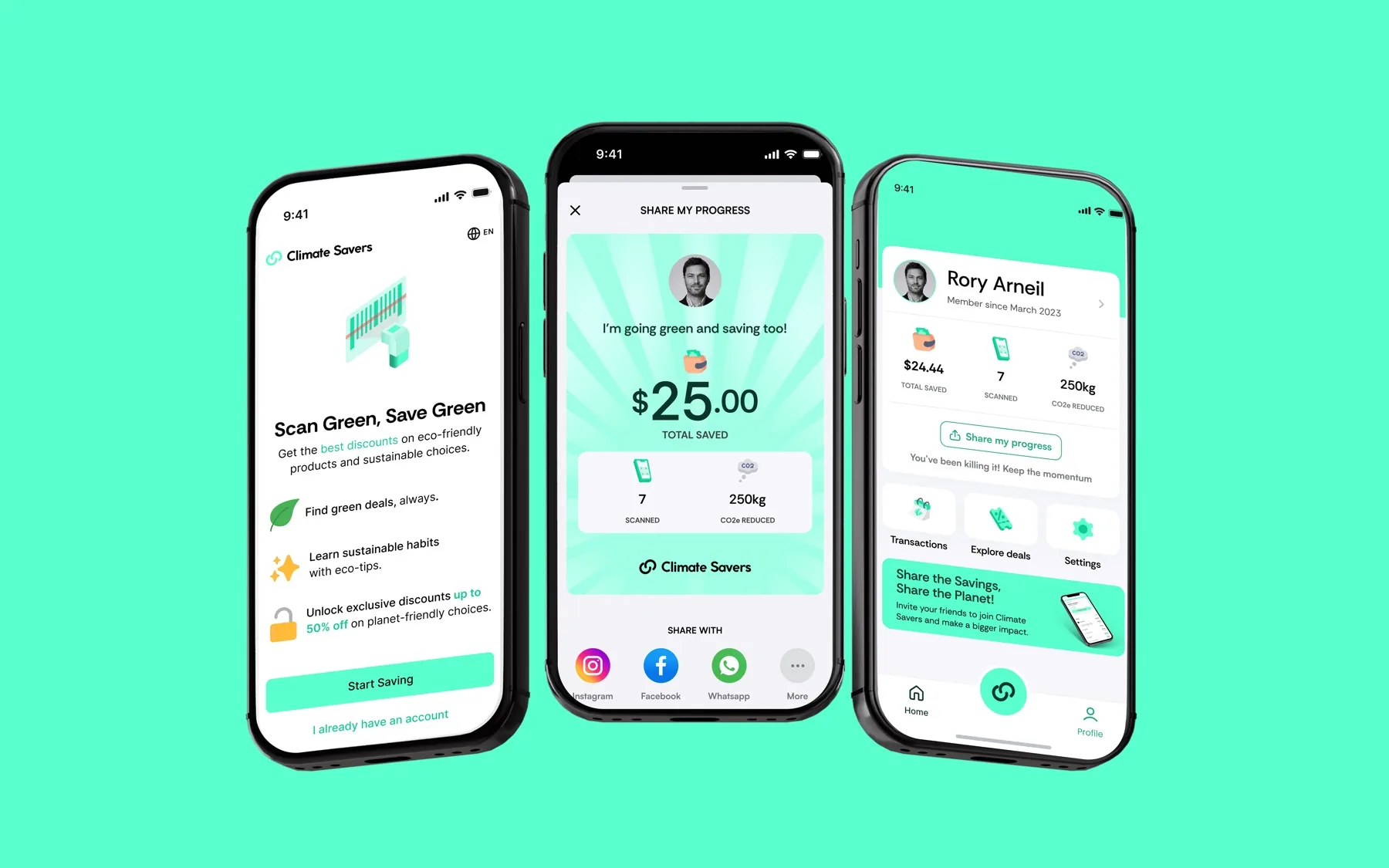
Climate Savers
A mobile app that turns every shopping trip into a climate action
A climate fintech platform that empowers people and companies to reduce their CO₂ footprint and get rewarded for it.
What I delivered
- Mobile flow designed from scan to cart
- First-scan rewards designed to turn missing data into contribution
- A clear path to deeper store integrations
Role & timeline
- Role
- Growth & Product Designer
- Timeline
- Ongoing (2024–Present)
- Client
- Climate Savers, a pre-seed fintech startup · Sustainability, Fintech
Methods
Overview
What would a mobile experience look like for Climate Savers?
Climate Savers is a sustainability-focused web platform that empowers users to track their carbon footprint, shop more responsibly, and earn cashback for eco-friendly purchases.
It already had a web platform, a place where users could access verified eco-friendly merchants and earn cashback on sustainable purchases. It worked. But it only captured a fraction of the picture.
My goal
Design a user experience that balances clarity, trust, and motivation, while making sustainability accessible.
Discovery
Everyday choices happen off-screen
Tracking your carbon footprint is easy when you're online…
The web platform gave users a way to shop consciously and get rewarded for it. Verified merchants, tracked purchases, real cashback. For intentional, planned shopping, it delivered.
…but everyday choices happen off-screen.
The real environmental impact of most people's lives doesn't happen in a browser. It happens in the cereal aisle. At the checkout. Picking up a bottle of shampoo on the way home. These micro-decisions, made dozens of times a week, are where a carbon footprint is actually built. And in those moments, users had nothing.
“You know your emissions when you're sitting at a laptop. But that's not where most of your choices happen.”
So we asked: how do we get Climate Savers into people's everyday lives?

Solution
A mobile app that turns every shopping trip into a climate action
We designed a mobile product that travels with users into supermarkets, high streets, and daily routines. By scanning a product's barcode, users can instantly see its CO₂ and plastic impact, make a more informed choice, and earn rewards for doing so.
The web platform stays useful for planned, intentional shopping. The mobile app handles everything else.
Solution
A sustainability decision in 5 seconds, standing in a supermarket aisle
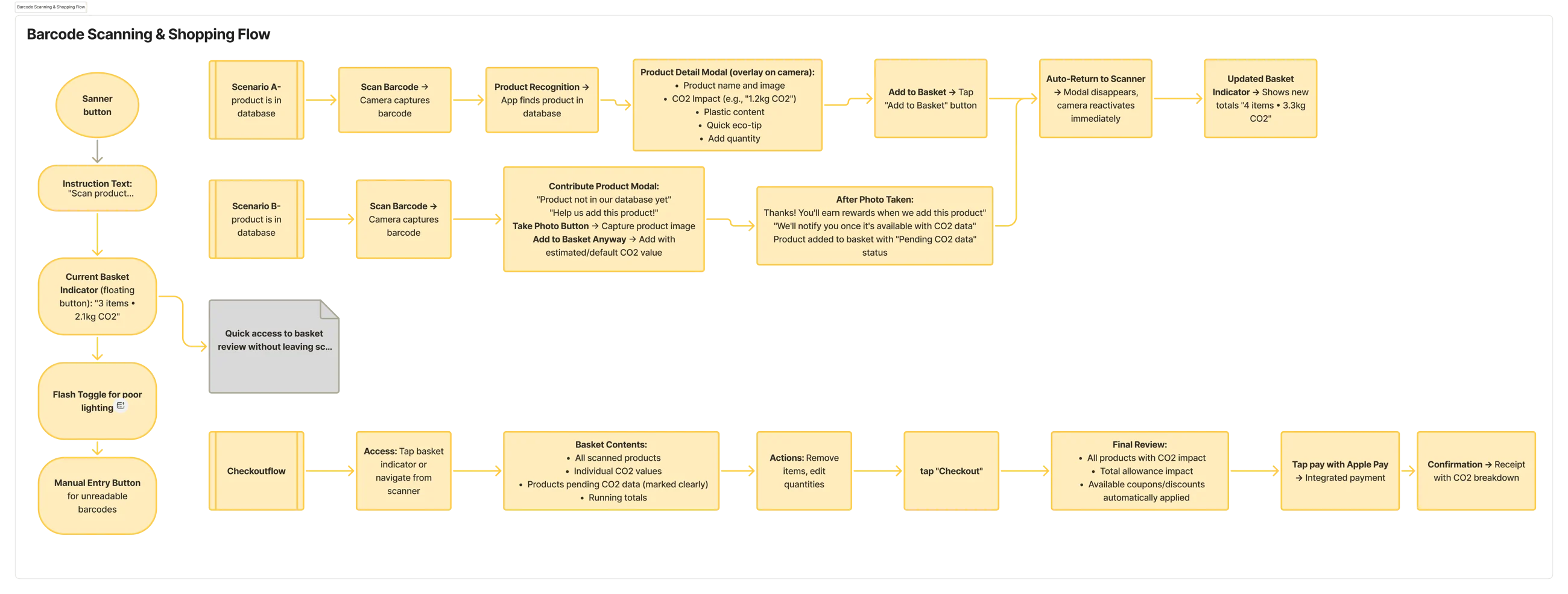
Each screen in the flow had a specific job: move the user from curiosity to action in as few steps as possible, with no dead ends.
- 01
Scan barcode in-storeA camera-first screen optimised for one-handed use in a supermarket aisle.
- 02
Impact sheet: CO₂ & plastic dataOnce scanned, the product's environmental footprint appears immediately, CO₂ emissions and plastic usage, translated into everyday equivalents so the numbers actually mean something.
- 03
Add to cart for trackingUsers can add the product to their in-app cart.
- 04
Product not found → first-scan rewardWhen a product has no data yet, instead of a dead end the user is prompted to be the first to scan it and earn a reward. A frustrating gap becomes a moment of contribution and motivation.
- 05
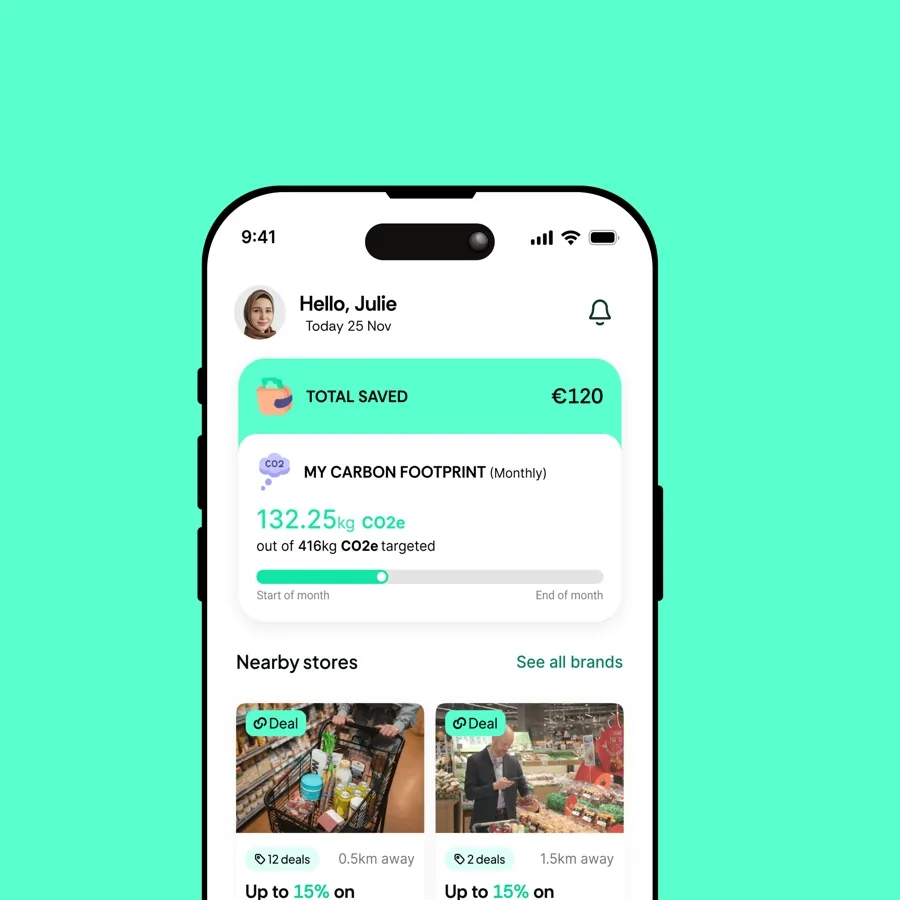
Cart & transactions viewA running log of scanned and purchased products showing cumulative savings and CO₂ reduced. This is where short-term actions compound into visible long-term progress.
Iterating the scan screen
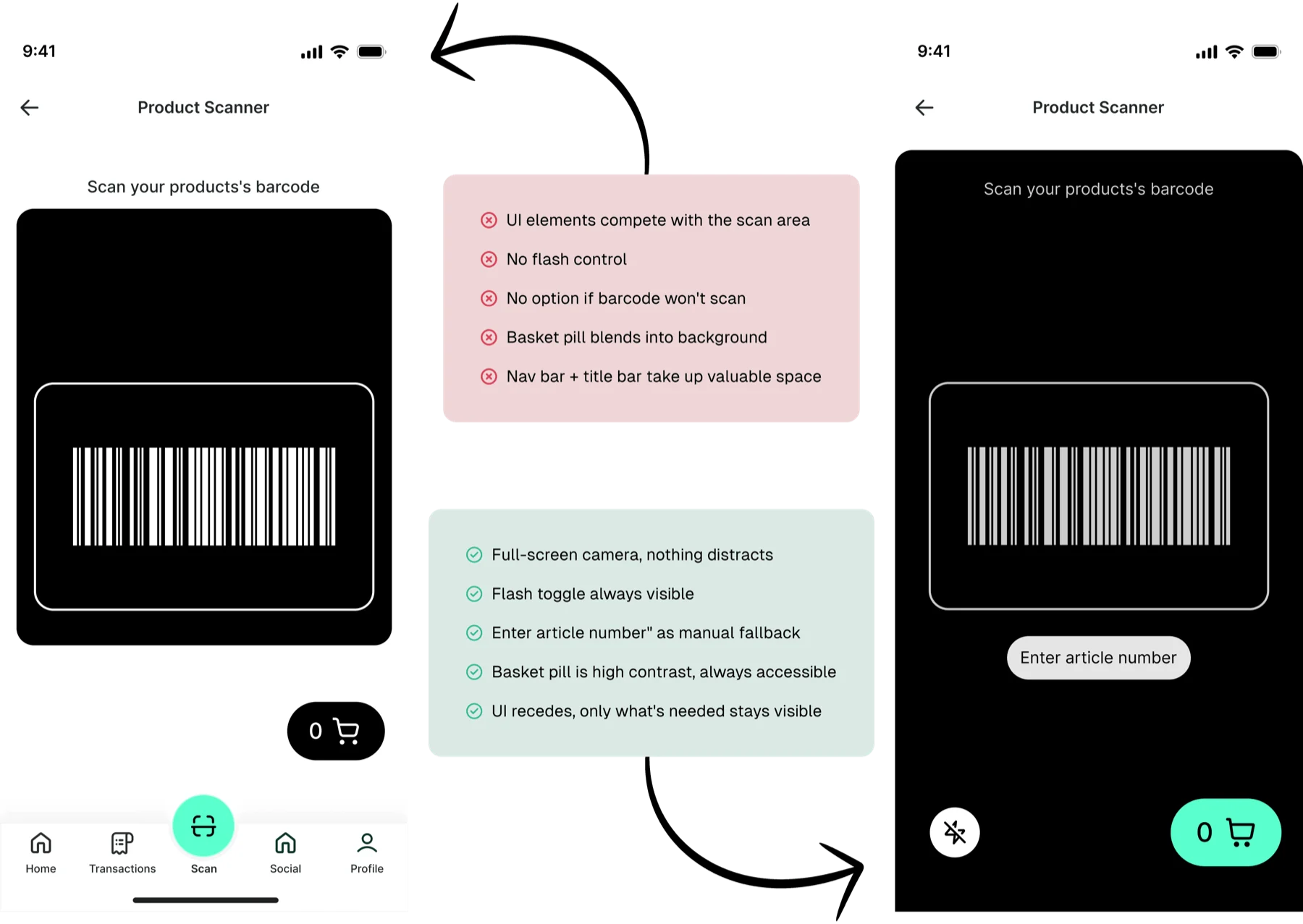
The first version of the scanner put too much between the user and the barcode. Version two strips it back to what the moment needs:
- Full-screen camera, instead of UI elements competing with the scan area
- A flash toggle that is always visible
- "Enter article number" as a manual fallback when a barcode won't scan
- A high-contrast basket pill that stays reachable, instead of blending into the background
- The nav and title bars recede, so only what's needed stays visible
Testing
Validating usability and motivation before development
I created a mobile prototype that simulates the full user journey: scanning, receiving results, and deciding on a purchase. The intent was to validate both usability and user motivation before development.
Open scan→Barcode read→Impact sheet→Add to cart→Missing? First to scan→Cart & transactions
Learnings
What testing showed, and where it goes next
Testing revealed where the experience broke, and pointed clearly to what the next version needed to fix.
Friction found
Limitations in how stores share product data meant the scanning process wasn't always seamless. Some products returned no results, creating dead ends in the flow.
New direction
This highlighted a clearer path forward: building deeper store integrations to reduce user effort while keeping the reward instant and motivating.
Other product design solutions
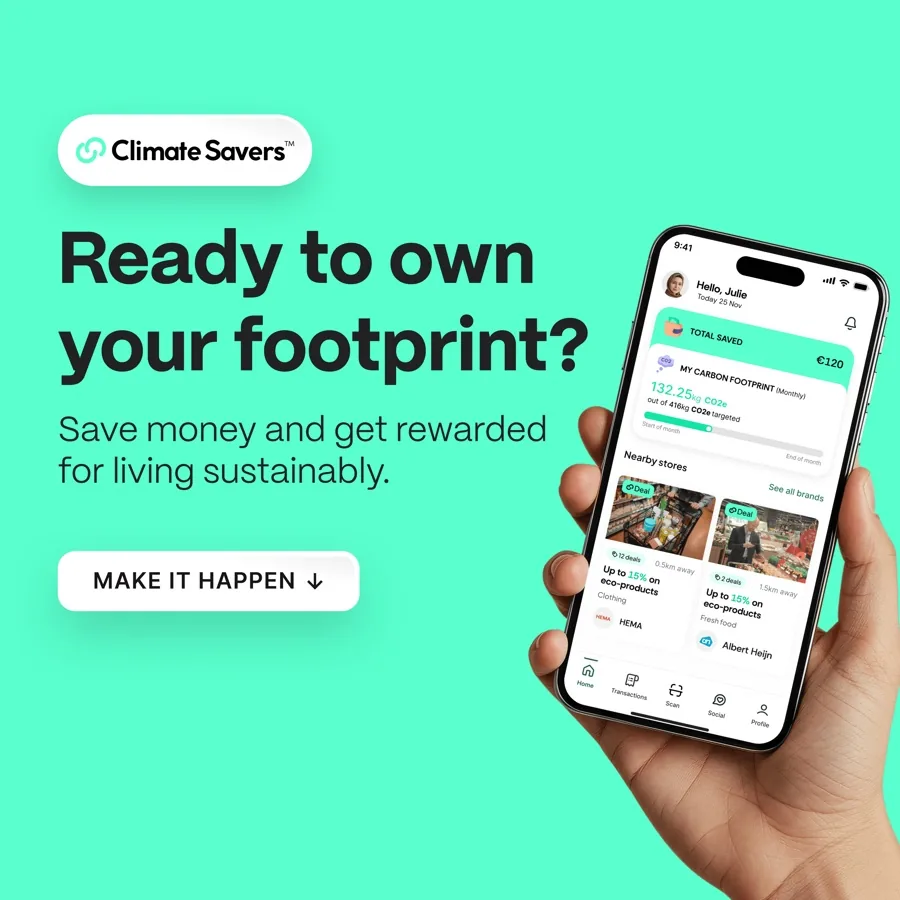
Work across the Climate Savers web platform and app.
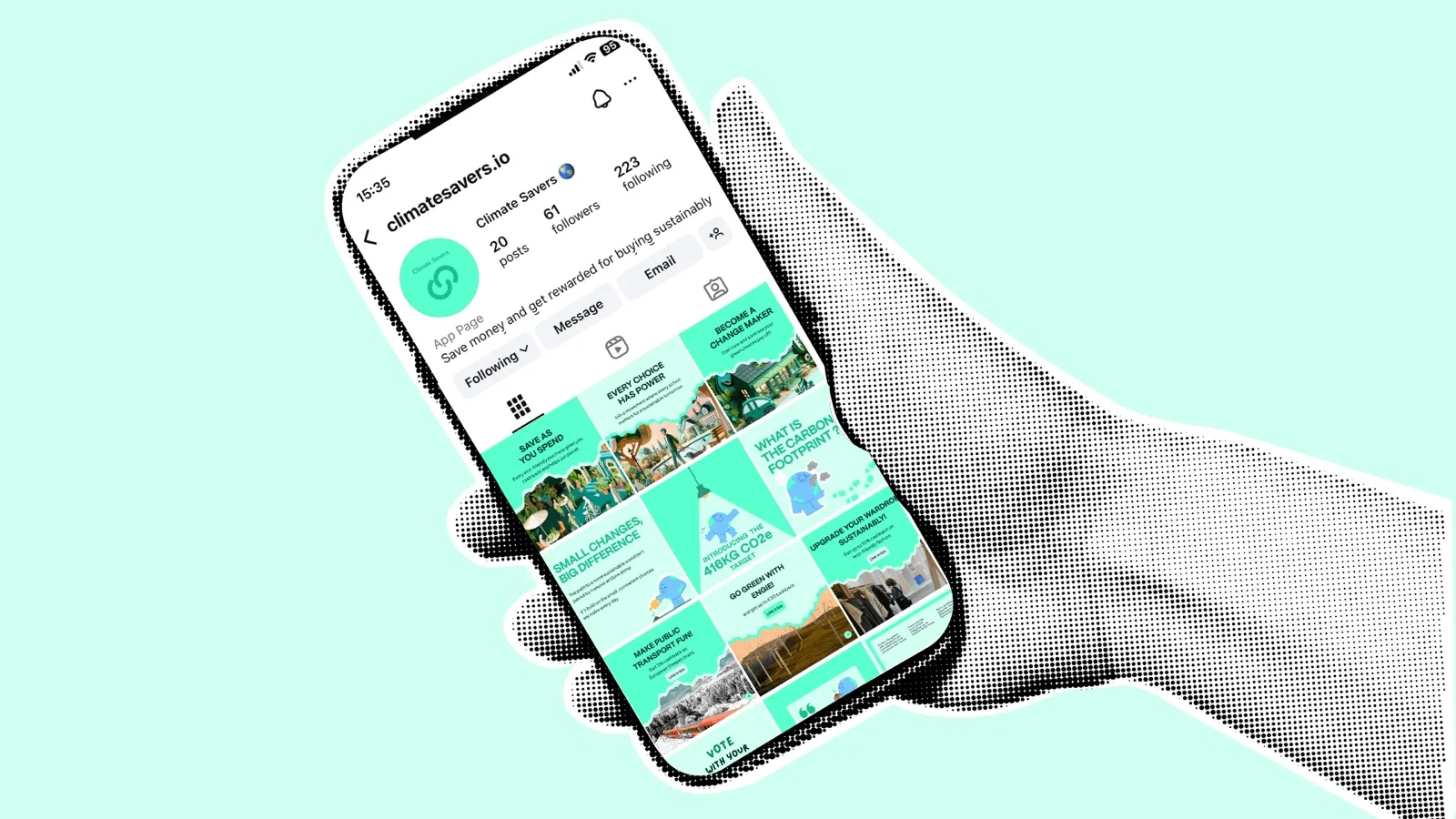
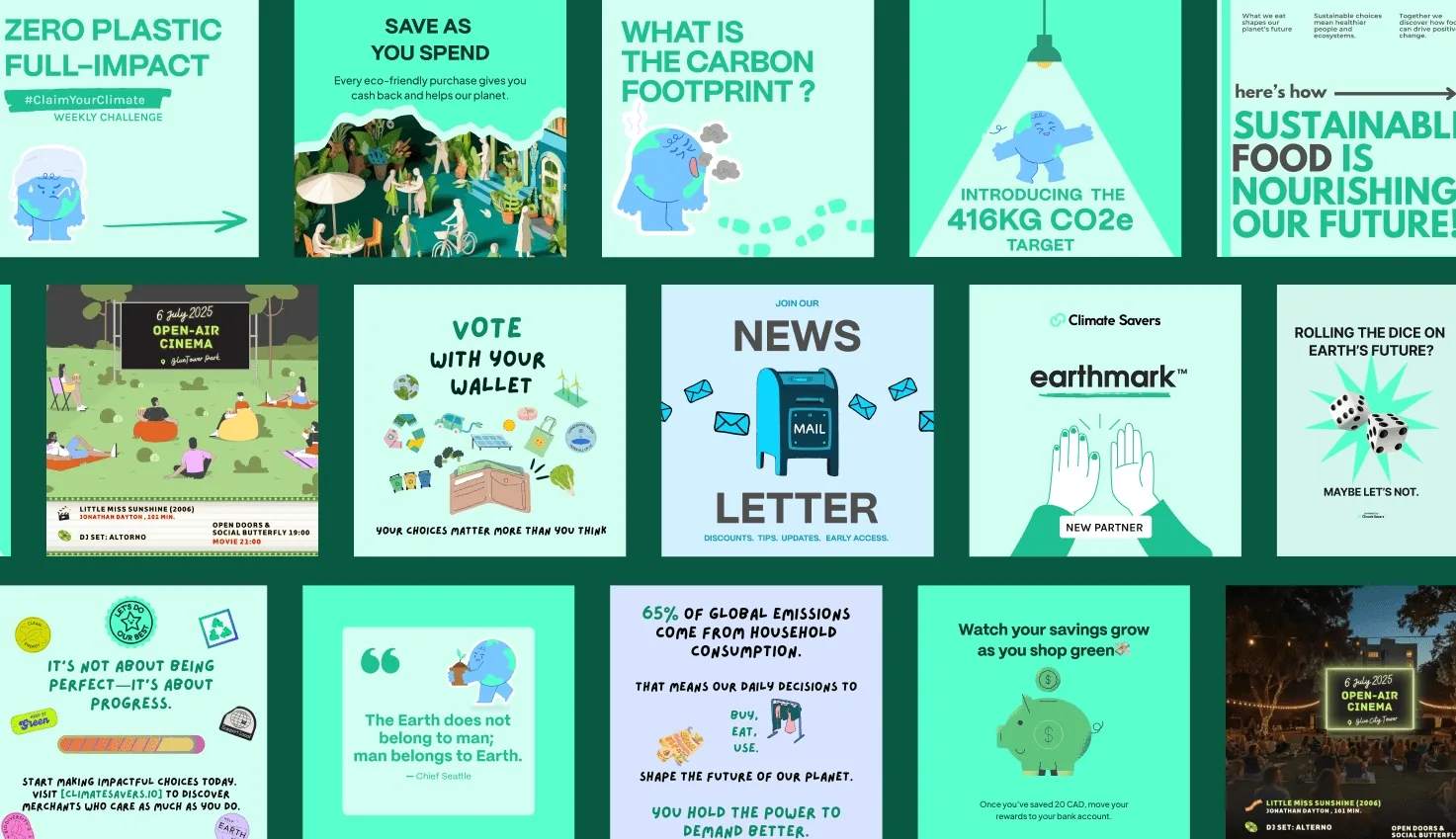
Building a supportive community
My goal with the marketing of the Climate Savers platform was to share engaging content that builds trust, grows engagement, and fosters a supportive community around Climate Savers. One way I approached this was by creating weekly challenges that encourage climate-friendly actions and spark conversations.